Soft Wash or Pressure Wash? What Each Surface on a Louisiana House Can Take
Most of what grows on a Louisiana house is alive, and the wrong kind of wash can damage the surface underneath it.
October 20, 2026 · 4 min read
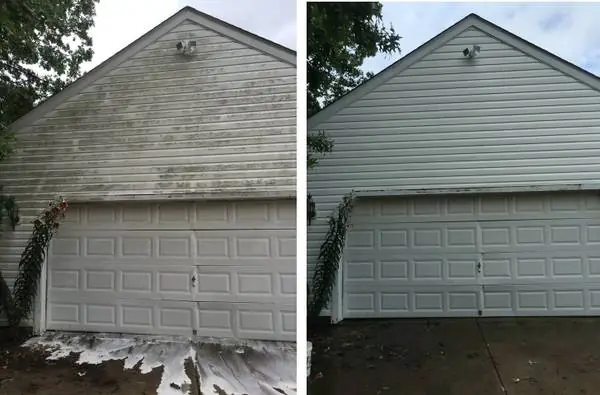
Most people call it all pressure washing, and in conversation that's fine. On the job there's a real difference between blasting a surface with a hard stream of water and cleaning it gently with a solution, then rinsing it low. Pick the wrong one and a clean house can end up with gouged wood, water behind the siding, or a roof that has lost its protective surface. Here's how we think about it, one surface at a time.
What the two methods actually are
Pressure washing relies on force. A narrow, fast stream knocks dirt loose and carries it away. That works on things that are hard, dense and flat, like a concrete driveway or a sidewalk. Soft washing flips the balance. A cleaning solution does the real work of killing mildew, algae and mold, and the water is only there to rinse. The pressure stays close to what you'd get from a garden hose.
The difference matters in Louisiana because most of what grows on our houses is alive. Algae and mildew anchor themselves to the surface. Blast the top layer off and you often leave the roots behind, so the green comes back quickly. Kill it where it lives and the surface stays cleaner for longer, without anything getting damaged along the way.
Vinyl, stucco and dryvit
Vinyl siding is the surface we wash most, usually for that gray-green film on the shaded sides. It's tougher than it looks, but it isn't armor. A hard stream aimed upward can slip behind the overlapping panels, and water that gets behind siding has nowhere to go. Soft wash is the right call. The solution loosens the film, a gentle rinse carries it off, and the seams stay dry.
Stucco and dryvit are more delicate than they appear. Stucco is porous and soaks up whatever you hit it with, and a hard tip can pit the finish or drive water into hairline cracks. Dryvit is a thin finish coat over insulation board, and it simply doesn't take a hard stream. Both get a soft wash. Even the stubborn algae along the bottom of a stucco wall comes off with solution and patience, not with force.
Brick, wood and concrete
Brick itself is hard, but the mortar between the bricks is the weak link, especially on older houses. A tight stream held close can cut into a joint and leave you with a repair job. We wash brick from a reasonable distance with lower pressure and let the solution lift the grime instead.
Wood is where we see the most damage from the wrong approach. Fences, decks and porch rails have a soft grain, and a narrow tip digs into it, leaving a fuzzy, striped surface that holds more water and grows algae even faster afterward. Wood gets a soft wash and a light rinse, worked along the grain, so it comes back looking like wood and not like it was sanded with a fire hose.
Concrete is the exception. Driveways, sidewalks, patios and walkways are dense and flat, and that's where more pressure earns its keep. A round surface cleaner, the spinning tool that rides just above the slab, takes off the black and green and leaves even lines instead of stripes.
Roofs
Roofs are the place where we'd urge any homeowner to be careful. Asphalt, tile and metal each react differently, but none of them appreciates a hard stream aimed up the slope. The dark streaks on a roof are usually algae, and a solution with a gentle rinse treats the cause without stripping the surface or pushing water under the edges of the shingles. If anyone offers to blast your roof clean, ask them plainly how they plan to protect it.
How to tell what you're getting
- Ask what pressure they use on siding and roofs, and what the cleaning solution is doing besides making suds.
- Listen for a plan for plants, windows and light fixtures before anyone starts a pump.
- Be wary of a crew that uses the same tip on every surface of the house.
- Confirm they're licensed and insured before they set foot on the property.
One of our Google reviewers, Jared Jones, put the result better than we can: “What I thought needed to be painted they cleaned with no high pressure and made it look like a new paint job.” That's the goal every time. A cleaner house, and the same house you started with.
Not sure what your house is made of, or what it can take? That's a normal place to start. Call (504) 270-4925 in New Orleans or (225) 678-8904 in Baton Rouge, or use the contact page, and we'll set up a free estimate. In-person estimates are usually scheduled within one to three business days.
Tiger Wash, (504) 270-4925
Call (504) 270-4925More articles
Why New Orleans Houses Turn Green, and How Often to Wash Them
It looks like dirt, but it is growth, and our climate is about as friendly to it as a climate gets.
Washing a Historic Home in the Garden District, Uptown or the French Quarter
A house that has stood for generations deserves a wash that takes the grime and leaves everything else exactly where it was.